Shelling on Keewaydin Island: The Beach With No Road to It
Eight miles of barrier island, no bridge, no concession stand, and a tide line that resets itself twice a day.

By Maren KesslerJanuary 14, 2026 · 8 min read
In this guide
The short answer
Is Keewaydin Island good for shelling?
Keewaydin Island is one of the best shelling beaches in Southwest Florida precisely because there is no road to it. Eight miles of undeveloped shoreline get picked over only by boat traffic. Go at low tide, ideally the morning after a winter front, and work the tide line rather than the dry sand.
- Keewaydin is boat-access only — no bridge, no road, no concessions.
- Low tide, especially after a winter cold front, produces the best haul.
- Common finds: fighting conch, lightning whelk, olives, sand dollars.
- Live shells must be left in place under Florida rules.
Keewaydin Island sits directly south of Gordon Pass, between Naples and Marco Island, and it is the last substantial undeveloped barrier island on this stretch of coast. Roughly eight miles long, no bridge, no road, no parking lot, no bathroom. Most of it is protected as part of the Rookery Bay National Estuarine Research Reserve.
The absence of a bridge is the entire point. Every shell on a drive-up beach has been picked over by several hundred people before you arrived. On Keewaydin the only competition is other boats, and on a weekday morning in the shoulder season there may be four of them along eight miles of sand.
Getting there
For visitors without their own boat, it comes down to one realistic approach.
- 01A private charter through Gordon Pass. Run out of Naples Bay, cross the pass, and beach on the bay side or anchor off the Gulf side — twenty minutes from the city dock. Naples Luxury Boat Tours runs the Keewaydin shelling and beach excursion as a three or five hour trip, and that is the version we recommend.
- 02Your own shallow-draft boat, if you brought one and know the pass. The channel shoals on the south side and the sandbar moves after every blow.
The tide is the whole thing
Shelling is a tide sport, not a beach sport. The productive window is the two hours either side of low tide, and the single best conditions of the month are the low tides around the new and full moons, when the water pulls back further than usual and exposes bars that are normally submerged.
The other multiplier is weather. A day or two after a hard west wind or a passing front, the Gulf dumps a fresh line of shells onto the beach that nobody has walked yet. Locals check the wind history as carefully as the forecast for exactly this reason.
What you will actually find
- Fighting conch — the most common good find, orange-brown and heavy for its size.
- Lightning whelk — the prize. Left-handed spiral, which is unusual, and can reach the size of a forearm.
- Banded tulip — elegant, glossy, with fine dark spiral lines.
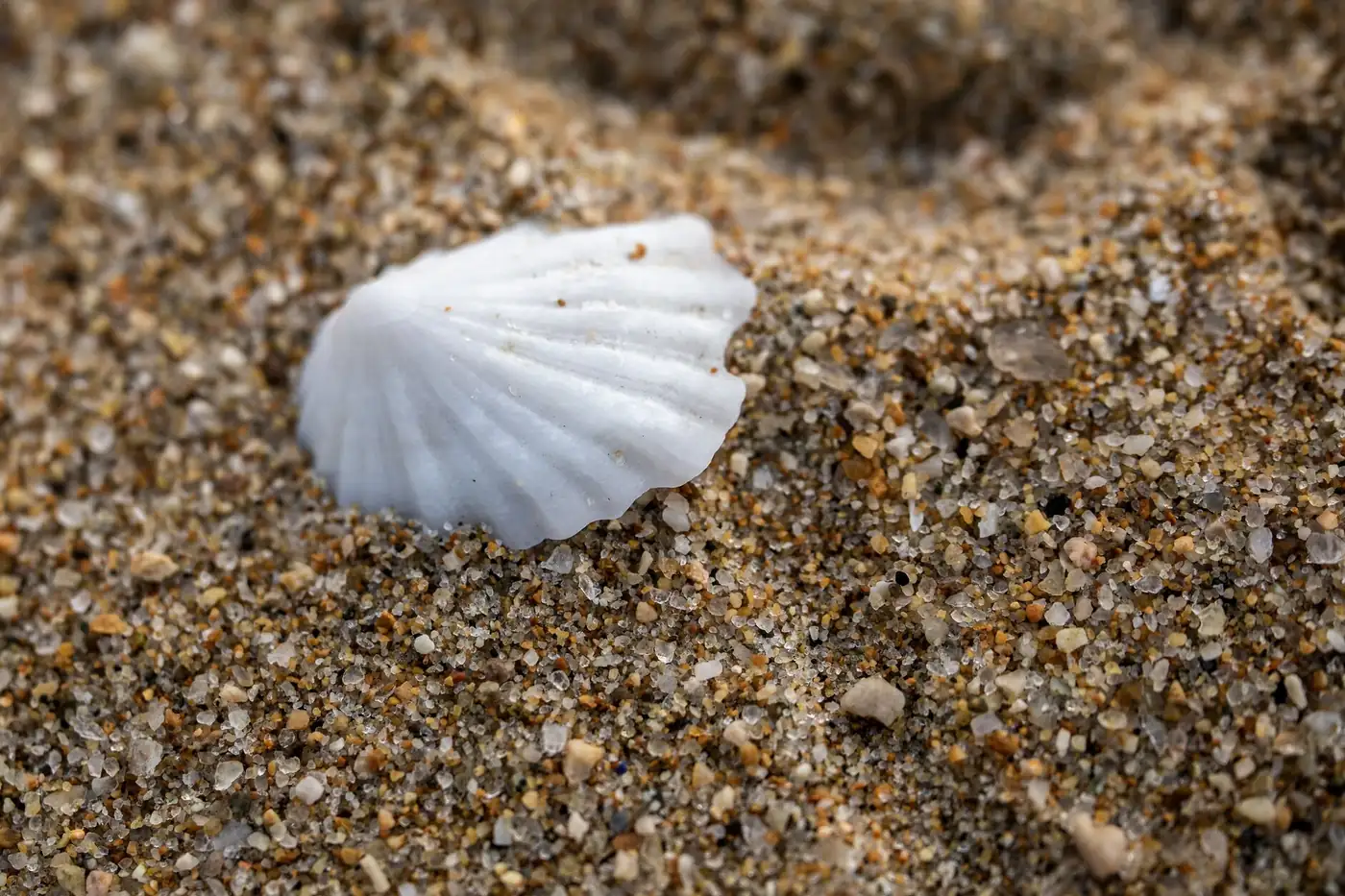
- Sand dollars — live ones are brown and fuzzy and must be returned to the water. White ones are the empty tests and are fair game.
- Olive shells, coquinas, cockles, pen shells and, if you have earned it, a junonia — the shell people collect for decades without finding.
The rules, which are real
Collier County prohibits the collection of live shells. That includes any shell with an animal in it, live sand dollars, live starfish and live sea urchins. The penalty is not theoretical. Empty shells are fine and there is no shortage of them.
Beyond legality there is the practical argument: a live whelk is a working animal in a functioning estuary, and the estuary is the reason there are shells at all. Check the aperture, check the weight, and if in doubt put it back where it was, right way up.
The old rule on this coast: if it moves, it stays. If it smells, you should have left it.
How to work a beach
Walk the wrack line — the ragged strip of seaweed, shell fragments and debris that marks the last high tide. That is where the sorting has already been done for you. Walk it slowly, in one direction, with the sun behind you so you are not reading glare.
The other technique is the swash zone: stand where the water is running back off the sand and let the retreating wave uncover things at your feet. It is slower and more meditative and it turns up the small perfect specimens the wrack line misses.
Practicalities
- Mesh bag, not plastic. Shells come out wet and sandy and a plastic bag turns into a swamp.
- Water shoes. There are broken shells and the odd stingray in the shallows — shuffle your feet.
- Go early. By 11 a.m. in season the near end of the island fills with weekend boats. Walk twenty minutes south and it empties again.
- Rinse your finds in fresh water at home and let them dry fully, or your suitcase will announce itself at baggage claim.
Common questions
- Can you drive to Keewaydin Island?
- No. Keewaydin has no bridge and no road access. It is reachable only by boat — for visitors that means a private charter out of Naples Bay, which is the trip Naples Luxury Boat Tours runs to the empty southern stretch.
- When is the best time to go shelling on Keewaydin?
- The two hours around low tide, ideally a spring low tide near the new or full moon, and best of all a day or two after a strong west wind or a passing cold front.
- Is it legal to collect shells in Naples, Florida?
- Empty shells are legal to collect. Collier County prohibits taking any live shell, including live sand dollars, starfish and sea urchins.
Keep reading
The Naples Sunset Cruise, Honestly Assessed
Naples faces due west, which means the sun sets into open water 365 nights a year. Here is how to be in the right place when it does.
August 6, 2026
Keewaydin Island: How to Actually Get to the Best Beach in Naples
Eight miles of undeveloped Gulf shoreline sitting a mile from one of the wealthiest zip codes in Florida, and almost nobody on it. The reason is simple: you cannot drive there.
August 4, 2026
Dolphin Watching in Naples: When, Where, and How Not to Waste a Morning
There are dolphins in Naples Bay almost every day of the year. Whether you see them mostly comes down to timing, water surface, and being somewhere they have a reason to be.
February 11, 2026